Adult autism assessment
Neuroaffirmative autism assessments led by Dr Chris Worfolk, Chartered Counselling Psychologist. Our assessments follow NICE guidelines and recognise a full range of presentations, including those who have masked for years.
Why choose us?
-
Autistic psychologist
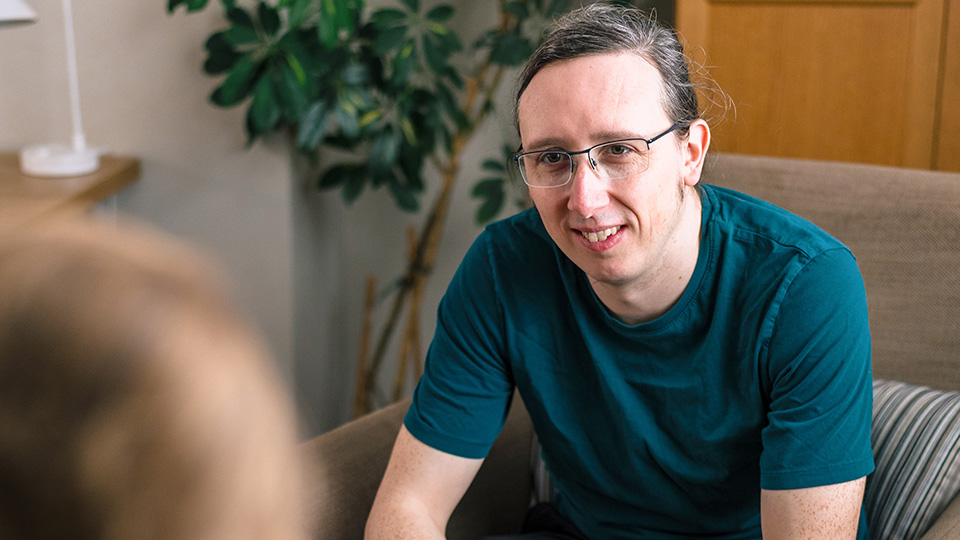
I'm late-diagnosed autistic and ADHD myself, and I carry out your assessment personally. I view autism as a difference, not a disorder to be "fixed".
-
At least two sessions
We draw on multiple sources of information, and I'll meet you for at least two sessions before reaching a decision.
-
Modern understanding
We look for masking, camouflaging, monotropism and inertia: the presentations others might miss.
-
Support afterwards
Every assessment includes a support session afterwards to help you make sense of the outcome.
What is an assessment like?
Find out more about how we do assessments.
Why get an assessment?
Many autistic individuals go undiagnosed and decide to pursue an assessment later in life. This can be for several reasons, including:
- Adults may seek autism assessments to understand themselves better. They may want to explain their challenges and find a sense of belonging.
- A diagnosis can help them access support, manage challenges, and improve self-esteem.
- Autism assessments can help with career guidance, accommodations, and understanding performance.
- They can also help with understanding family members, improving relationships, and seeking support.
How does the process work?
Step 1: After registering with us, we will ask you to complete a form providing background information on your experience and why you believe you may be autistic.
Step 2: We'll meet for your assessment. This typically involves one or two sessions, usually about a week apart. During these sessions you will have an in-depth conversation about your experiences.
Step 3: Where possible, we will gather collateral information from your parents, family member or other individual who has known you since childhood. This can be done face-to-face or via a form. If you are unable to provide a suitable person, we can still carry out your assessment, but it is helpful to have this additional information.
Step 4: We will consult with other professionals as required, as part of our multidisciplinary team (MDT) approach. This allows us to draw on a range of skills to ensure we make an accurate assessment.
Step 5: We'll meet one final time and arrive at a formal decision as to whether you are autistic or not. Regardless of the outcome, we will be able to signpost you to further support.
Step 6: If we identify that you are autistic, we will provide you with a set of documentation to verify your identification/diagnosis.
Post-assessment support: After the assessment, we offer a support session to help you reflect on what comes next. Rather than simply giving you a diagnosis and sending you on your way, these sessions provide space to make sense of the outcome and what it means for you. This might include developing a deeper understanding of neurodivergence, exploring your identity in light of the assessment, and discussing practical strategies that may help with any difficulties you experience.
What are the potential outcomes?
We may identify that you are autistic. If so, welcome to the community. We may identify that you are not autistic. If so, we will be able to signpost you to appropriate support. On rare occasions, we may be unable to reach a clear conclusion.
Alternatively, start with a consultation
A consultation is a one-hour session with me to talk through your experience, ask questions, and think about what would be useful for you. Some people use it to decide whether to pursue a full assessment. Others come for a specific question, a second opinion, or to make sense of something with someone who understands autism from the inside.
Location
Leeds
In person in Leeds city centreOnline
Zoom sessions anywhere in the UKBook an assessment
£1,500. This includes the assessment itself and a full set of documentation if we identify that you are autistic.
Book onlineBook a consultation
£200. If you later decide to go on to a full assessment, this fee is deducted from the cost.
Book onlineFrequently asked questions
Can I use my private health insurance?
If your private health insurance allows you to select any Registered Psychologist then yes. You will need to arrange payment with your health insurance provider.
Will my assessment be recognised?
Yes. Our assessments follow the best practice guidelines defined by the National Institute for Health and Care Excellence and are carried out by psychologists registered with the Health & Care Professions Council. However, if you are in any doubt, please check with your workplace/college first.
Do you see people outside of the UK?
No, unfortunately not.
Do family members need to be involved in my assessment?
No. Where possible, we aim to gather collateral information from someone who knew you when you were young, as this can help improve the accuracy of the assessment. However, if nobody is available, or you would prefer not to involve others, your assessment can still proceed.
Is there a payment plan?
You can split the cost of assessments across three monthly payments using Klarna. This is managed by Klarna and subject to their approval. To get started, just ask us for a payment link when you're ready to book. Payment plans are not available for consultations.